You Won’t Believe Yogyakarta’s Cityscape—This Is Next-Level Urban Magic
Yogyakarta isn’t just about ancient temples or mountain views—its cityscape is quietly going viral. I walked its streets not expecting much, but was hit by a wave of color, culture, and unexpected urban charm. From street art alleyways to glowing night markets and traditional architecture meeting modern life, this Indonesian city pulses with soul. If you think cityscapes are all skyscrapers and neon, wait till you see Yogyakarta. It’s raw, real, and absolutely stunning in ways no one’s talking about—until now.
The Unexpected Pulse of Urban Yogyakarta
Often overshadowed by its reputation as the cultural heart of Java, Yogyakarta reveals a side rarely highlighted in travel brochures: a vibrant, breathing urban rhythm that thrives beneath the surface of tradition. While visitors flock to Borobudur and Prambanan, the city itself unfolds in quiet symphonies of daily life—motorbikes weaving between stately banyan trees, the clink of coffee cups in sidewalk cafes, and the distant hum of gamelan practice drifting from a neighborhood langgar. Unlike Jakarta’s relentless pace or Bandung’s trendy gentrification, Yogyakarta maintains a grounded authenticity. It does not rush to erase its past for the sake of modernity; instead, it allows the old and new to coexist in a delicate, lived-in harmony.
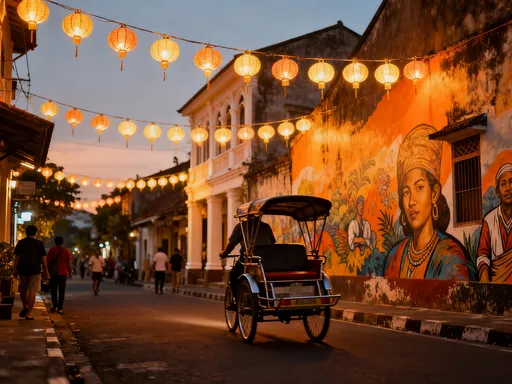
This balance is most visible in the way daily rituals blend seamlessly with contemporary urban energy. Pedicabs, known locally as becak, still ferry residents through narrow lanes, their brightly painted frames adding splashes of color to otherwise quiet streets. Yet just steps away, young professionals sip artisanal coffee in minimalist co-working spaces housed in colonial-era buildings. The sound of a street musician’s electric guitar might echo down a lane where an elder practices wayang kulit repair in a dimly lit workshop. These contrasts do not clash—they converse. They form a cityscape that feels less like a constructed destination and more like an unfolding story, shaped by generations of cultural continuity and quiet innovation.
What makes Yogyakarta’s urban character unique within Indonesia is its refusal to conform to a single aesthetic. There are no glass towers dominating the skyline, no sprawling malls erasing local character. Instead, development proceeds with restraint, often guided by community values and a deep respect for Javanese philosophy. The city’s rhythm is slower, more deliberate. It invites you not just to observe, but to participate—to walk, to linger, to notice the way sunlight hits a batik cloth hung out to dry, or how a street vendor arranges her fruit with almost artistic precision. In this way, Yogyakarta’s cityscape is not defined by monuments, but by moments.
Street Art & Cultural Expression in Public Spaces
One of the most electrifying aspects of Yogyakarta’s evolving identity is its flourishing street art scene. Far from being mere decoration, the city’s murals are acts of cultural storytelling—bold, poetic, and deeply rooted in local consciousness. Wander the alleys surrounding the Kraton, the historic Sultan’s palace, and you’ll encounter walls transformed into open-air galleries. Here, traditional Javanese motifs intertwine with modern symbolism: wayang figures depicted in surreal dreamscapes, rice farmers painted alongside digital code, or quotes from ancient poets rendered in graffiti-style lettering. These artworks do not shout; they whisper, provoke, and sometimes challenge, offering a visual dialogue between heritage and contemporary life.
The backstreets near Beringharjo Market, one of the oldest in Java, are particularly rich in artistic expression. What was once a network of service lanes has become a canvas for a new generation of artists. Many of these creators are affiliated with local art schools like the Indonesia Institute of the Arts (ISI), and they use public space to explore themes of identity, environmental awareness, and social resilience. A mural might depict a woman in kebaya holding a smartphone, her gaze steady, symbolizing the quiet strength of Javanese women in a digital age. Another shows a tree growing from a cracked concrete wall, its roots entwined with traditional batik patterns—a metaphor for cultural endurance in the face of urbanization.
What sets Yogyakarta apart from other Southeast Asian cities with street art movements is the organic, almost impermanent nature of its murals. There are no official commissions or curated festivals dictating what appears on the walls. Instead, the art emerges spontaneously, often changing every few months as new messages take shape. This fluidity keeps the cityscape dynamic and alive. It also reflects a broader cultural value: the Javanese concept of *rukun*, or harmony, which emphasizes balance and mutual respect. Even in rebellion or critique, the art rarely feels confrontational. It invites reflection rather than confrontation, making the city itself a space for gentle, ongoing conversation.
Night Markets as Urban Theaters
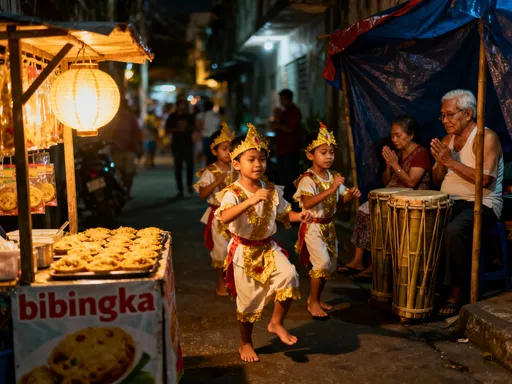
As dusk settles over Yogyakarta, the city undergoes a transformation that is both sensory and emotional. The streets, particularly along Malioboro Road, awaken with a rhythm all their own. Food stalls ignite their charcoal grills, sending plumes of fragrant smoke into the air. Vendors unfold batik textiles, their intricate patterns glowing under strings of fairy lights. Families, couples, and solo wanderers fill the sidewalks, moving in a slow, meandering flow that feels more like a communal ritual than mere shopping. This is not just a market—it is an urban theater, where every vendor is a performer, every passerby a participant, and the city itself the stage.
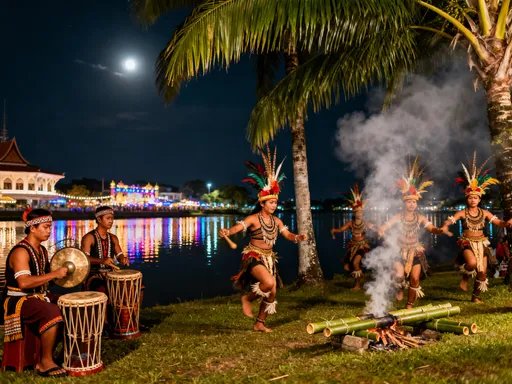
The sensory richness of Malioboro at night is unforgettable. The sizzle of *nasi goreng* hitting a hot pan, the sweet aroma of *klepon* (pandan-flavored rice balls filled with palm sugar), the rhythmic beat of a street drummer playing on overturned buckets—these elements combine into a living soundscape. The visual rhythm is equally compelling: the flicker of lanterns, the glow of smartphone screens illuminating faces, the occasional flash of a traditional dancer’s costume during an impromptu performance. Unlike the highly commercialized night markets of Bangkok or Taipei, Malioboro retains a deeply local character. There are no mass-produced souvenirs or generic fast food chains. Instead, you’ll find hand-carved wooden masks, handwoven *tenun* fabric, and snacks prepared with family recipes passed down for generations.
What makes this experience truly special is its authenticity. The night market is not staged for tourists; it is an essential part of urban life. For many residents, an evening stroll down Malioboro is a ritual of connection—to family, to community, to the city itself. Children chase each other between stalls, elders sit on plastic stools sipping *jamu* (traditional herbal drinks), and young artists sketch portraits for small fees. The market’s energy is warm, inclusive, and unhurried. It reflects a city that values presence over profit, experience over efficiency. In an age where urban spaces are increasingly sanitized and standardized, Malioboro stands as a testament to the enduring power of human-scale design.
Architecture That Tells a Story
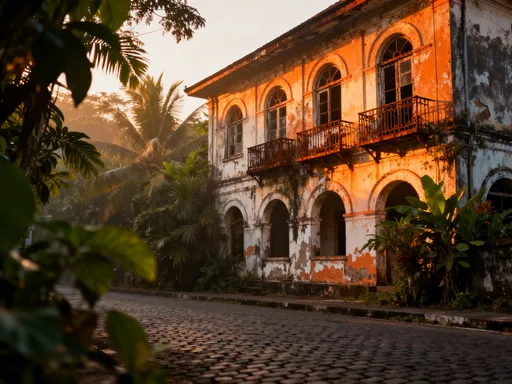
Yogyakarta’s built environment is a living archive, where every structure contributes to a layered narrative of history, resilience, and adaptation. Unlike cities that have erased their past in favor of modern development, Yogyakarta has chosen to preserve and repurpose. Colonial-era buildings from the Dutch period still stand prominently, their wide verandas, high ceilings, and arched windows now housing cafes, bookstores, and boutique hotels. These structures do not feel out of place; instead, they blend with the surrounding Javanese architecture through subtle design harmonies—shared use of natural materials, attention to airflow and shade, and a quiet elegance that avoids ostentation.
Perhaps the most striking example of this architectural dialogue is the coexistence of colonial buildings with traditional *joglo* houses. The joglo, with its towering, multi-tiered roof resembling a mountain peak, is a symbol of Javanese cosmology and social hierarchy. In neighborhoods like Prawirotaman and Sosrowijayan, it’s common to see a joglo house nestled beside a repurposed Dutch warehouse, the two structures standing in quiet conversation across centuries. The contrast is not jarring—it is poetic. The joglo’s wooden pillars, carved with intricate floral motifs, speak of ancestral wisdom, while the colonial brickwork whispers of a complex past. Together, they form a visual language that acknowledges history without being trapped by it.
Preservation efforts in Yogyakarta are largely community-driven. While the city has seen some modern development, there is a strong cultural commitment to maintaining architectural integrity. Local regulations often require new constructions to incorporate traditional design elements, such as sloping roofs or open courtyards, ensuring that the city’s aesthetic remains cohesive. Moreover, many old buildings are restored using traditional techniques and materials, a practice supported by local artisans and heritage organizations. This approach to urban development is not about nostalgia—it is about continuity. It recognizes that a city’s soul is not found in its newest skyscraper, but in the way it honors the stories embedded in its streets and structures.
Green Spaces Within the Urban Fabric
In a world where cities are growing denser and more concrete-bound, Yogyakarta’s commitment to open, green spaces is both refreshing and essential. At the heart of this philosophy are the *alun-alun*—traditional city squares that serve as social, spiritual, and visual anchors. The two most prominent, Alun-Alun Lor (North Square) and Alun-Alun Kidul (South Square), flank the Kraton and have been central to urban life for centuries. Unlike formal parks designed for recreation, these spaces are deeply integrated into the rhythm of daily existence. They are places of gathering, reflection, and quiet celebration.
Alun-Alun Kidul, in particular, exudes a serene energy. Lined with banyan trees whose roots twist like ancient sculptures, the square is often filled with families flying kites, children playing traditional games, and elders practicing tai chi at dawn. At night, it transforms into a gentle hub of activity—couples stroll hand-in-hand, students gather for informal discussions, and street vendors sell warm *wedang ronde* (ginger drink with glutinous rice balls). The absence of heavy commercialization allows the space to breathe. There are no loud advertisements, no neon signs—just the soft glow of lanterns and the murmur of conversation. This simplicity is intentional, reflecting the Javanese value of *nrimo*, or acceptance, which encourages contentment with what is, rather than what could be.
These green spaces are not merely decorative; they play a crucial role in the city’s environmental and emotional well-being. They provide natural ventilation in a tropical climate, reduce urban heat, and offer psychological relief from the density of city life. More importantly, they serve as equalizers—spaces where people from all walks of life come together without barriers. A university professor might sit on the same grassy patch as a street vendor, both watching the same kite soar into the evening sky. In this way, the alun-alun are not just parks; they are living expressions of community, where the urban fabric is softened by nature and human connection.
How to Experience the Cityscape Like a Local
To truly appreciate Yogyakarta’s cityscape, one must move beyond the checklist of tourist attractions and embrace the rhythm of local life. The best time to explore is early in the morning, just after sunrise, when the city is still waking up. Streets are quiet, the air is cool, and the light casts a golden hue on colonial facades and batik stalls alike. Begin at Alun-Alun Lor, where you might witness the ritual of *mlaku-mbathuk*—walking blindfolded between two mystical banyan trees, a local tradition believed to bring spiritual clarity. From there, walk south along Jalan Margo Mulyo, a quiet lane lined with art studios and family-run warungs serving *bubur ayam* (chicken porridge).
For photography, the hours between 5:00 and 7:00 PM offer the most dynamic visuals. Malioboro Road comes alive with lights, movement, and color. Use a wide-angle lens to capture the depth of the street scenes, or a telephoto to isolate moments—a vendor flipping *martabak*, a child reaching for a balloon, a mural glowing under a streetlamp. Avoid the temptation to rush; instead, pause frequently. Sit at a plastic table, order a glass of *es teh manis* (sweet iced tea), and simply watch. The city reveals its beauty in stillness as much as in motion.
Transportation is another key to immersion. While taxis and ride-hailing apps are available, the most authentic way to move through the city is by becak. These pedal-powered rickshaws allow you to navigate narrow alleys inaccessible to cars and offer a chance to talk with drivers, who often double as informal tour guides. Alternatively, rent a bicycle and explore at your own pace. The flat terrain and relatively light traffic make cycling a pleasant and sustainable option. Above all, engage with people. Ask a batik seller about her designs, compliment a street artist on his work, or accept an invitation to join a family for tea. These small interactions transform sightseeing into connection, and the cityscape into a shared experience.
Why Yogyakarta’s Cityscape Matters Now
In an era of rapid urbanization and cultural homogenization, Yogyakarta offers a powerful counter-narrative. It proves that a city can evolve without erasing its soul. While many urban centers around the world chase modernity at the cost of authenticity, Yogyakarta demonstrates that growth and heritage are not mutually exclusive. Its streets tell a story of balance—between old and new, quiet and vibrant, local and global. This is not accidental; it is the result of a deep cultural commitment to harmony, sustainability, and community.
The city’s approach to urban development holds valuable lessons for other Southeast Asian cities facing the pressures of tourism, gentrification, and climate change. By prioritizing human-scale design, preserving green spaces, and supporting grassroots creativity, Yogyakarta shows that urban life can be both dynamic and humane. It reminds us that cities are not just places to live or visit—they are living entities, shaped by the values, memories, and daily choices of their people.
More than ever, we need cities that invite us to slow down, to notice, to connect. Yogyakarta does this effortlessly. It does not dazzle with spectacle; it enchants with sincerity. Its cityscape is not a backdrop, but a participant in the lives it shelters. To walk its streets is to witness a quiet revolution—one where culture is not preserved behind glass, but lived on every corner, in every interaction. So the next time you think of urban magic, don’t picture skyscrapers or neon. Picture a mural on a back alley wall, a family flying a kite at dusk, a cup of coffee sipped in a century-old building. Picture Yogyakarta—raw, real, and breathtakingly alive.