I Ate My Way Through Sicily—And Learned What No One Warns You About
Sicily’s food culture is a dream—explosive flavors, sun-ripened ingredients, centuries of history on every plate. But behind the Instagram-perfect cannoli and steaming plates of pasta alla Norma lies a different story. I dove in headfirst, fork-first, and discovered some harsh truths. From tourist traps serving reheated arancini to the myth of “authenticity” in crowded markets, the real pitfalls aren’t in the food—they’re in how we chase it. This is what no travel guide tells you.
The Allure of Sicilian Cuisine – A Love Letter to Flavor
Sicilian cuisine is not just food—it’s a living archive of conquests, migrations, and resilience. Every bite tells a story shaped by centuries of Arab, Greek, Norman, Spanish, and French influence. The island’s fertile soil, kissed by Mediterranean sun and tempered by sea breezes, produces ingredients of extraordinary depth. Tomatoes burst with sweetness, lemons carry a sharp perfume, and wild oregano grows in rocky crevices, infusing dishes with earthy warmth. This is a place where food is not merely sustenance but identity, where grandmothers guard recipes like heirlooms and markets hum with the rhythm of daily life.
One need only walk through the Vucciria market in Palermo to feel the pulse of this culinary legacy. The air is thick with the sizzle of panelle—chickpea fritters crisp at the edges, soft within—cooked fresh in copper vats. Nearby, vendors stack caponata in glistening mounds, a sweet-and-sour symphony of eggplant, celery, capers, and tomatoes, its complexity a testament to Arab culinary influence. In the hills above Taormina, shepherds still make ricotta using methods unchanged for generations, their whey-fed pigs yielding prized salumi that find their way into stuffed pasta and rustic sandwiches.
Desserts, too, are layered with history. Cassata, with its sponge cake shell, ricotta filling, and candied fruit, is a Baroque confection born in convents. Granita, scraped by hand each morning, offers a refreshing counterpoint to the afternoon heat, its flavors ranging from almond to jasmine. Even the humble arancino—rice ball stuffed with ragù, peas, and mozzarella—carries the imprint of Arab innovation, its golden crust a promise of comfort and craftsmanship. Sicily’s food is not just delicious; it is deeply symbolic, a celebration of survival and synthesis.
What makes Sicilian cuisine truly exceptional is its connection to place. Unlike mass-produced versions found in tourist centers, the real magic happens in small towns where fishermen unload their morning catch directly to trattorias, and farmers bring crates of eggplant to neighborhood osterias. The food here is seasonal, regional, and deeply personal. A dish of spaghetti with sardines in Palermo differs from one in Syracuse, not just in ingredients but in spirit. This is not a monolithic cuisine but a mosaic, each piece reflecting local pride and ancestral memory. To eat in Sicily is to engage with history—one forkful at a time.
Pitfall #1: The “Authentic” Trap – When Tradition Becomes a Performance
One of the most seductive promises of travel is the pursuit of “authentic” food. Tourists often seek out family-run trattorias, rustic signage, and handwritten menus, believing these markers guarantee a genuine experience. Yet in Sicily, the idea of authenticity has been commodified, repackaged for cameras and review platforms. Many restaurants that appear traditional are, in fact, carefully curated performances. The warm lighting, the open kitchen view, the nonna in an apron posing for photos—these are not always signs of real home cooking, but elements of a carefully constructed narrative designed to appeal to visitors.
In Taormina, a town beloved by cruise ship tourists, I dined at a highly rated restaurant advertised as a “century-old family eatery.” The menu boasted house-made pasta and daily seafood specials. The waitstaff spoke flawless English, and the wine list featured international labels alongside local offerings. The arancini arrived hot but tasted reheated, the rice dry, the filling lacking depth. When I asked the chef about sourcing, he admitted with a shrug that most seafood came frozen from the mainland. The “daily catch” was a fiction. Yet online reviews praised the “authentic Sicilian experience,” complete with photos of smiling families and steaming plates. The performance had succeeded—reality was secondary.
This phenomenon is not unique to Taormina. Across Sicily, especially in coastal towns and UNESCO sites, restaurants optimize for tourist expectations rather than culinary integrity. Fixed menus, often in multiple languages, replace the fluid, ingredient-driven offerings of local dining. The “secret family recipe” may be real, but its execution is diluted to suit broad palates. Even the ambiance—rustic wood, checkered tablecloths, folk music—can be a calculated aesthetic rather than a reflection of daily life. Authenticity, in these cases, becomes a product, sold by the plate.
True authenticity, however, exists off the beaten path. It happens in backstreet osterias where the menu is spoken, not written, and where the cook decides what to serve based on what arrived at the market that morning. It’s in the homes of locals who invite guests for Sunday lunch, where dishes are made with care, not for show. To find it, one must move beyond the curated facade and embrace uncertainty. Ask residents where they eat. Look for places without websites or social media. Accept that the most “real” meals may not be the most photogenic—and that’s exactly what makes them valuable.
Pitfall #2: Seasonal Disasters – Eating Out of Time
Sicilian cuisine is rooted in seasonality, yet many travelers overlook this fundamental truth. The island’s food calendar is precise: artichokes in spring, tomatoes at their peak in July and August, figs and prickly pears in late summer, citrus in winter. To eat outside this rhythm is to miss the essence of the cuisine. Yet in high-traffic areas, menus remain static year-round, offering summer dishes in winter and vice versa, often at the cost of flavor and integrity.
I learned this the hard way in early November, when I ordered pasta with fresh tomatoes in a seaside restaurant near Cefalù. The dish arrived with a dull red sauce, lacking brightness or sweetness. The tomatoes were clearly not local, likely shipped from elsewhere in Italy or beyond. The chef, when questioned, admitted they used canned tomatoes off-season but presented them as fresh. “Tourists expect it,” he said. “They want the ‘Sicilian experience,’ even in November.” What I received was not just a subpar meal but a disconnection from the natural rhythm that defines authentic Sicilian cooking.
Seasonality is not a suggestion in Sicily—it is a necessity. The island’s culinary traditions evolved around what could be grown, harvested, or preserved at different times of year. In summer, caponata is vibrant and tangy, made with just-picked eggplants and sun-ripened tomatoes. In winter, the same dish might use preserved vegetables or omit tomatoes altogether. Granita changes with the months: almond in spring, lemon in high summer, coffee in winter. Even street food adapts—panelle are more common in cooler months, while fresh seafood dominates in warm weather.
Ignoring this cycle leads to diminished experiences. Eating off-season means relying on imports, greenhouse produce, or frozen ingredients, all of which lack the intensity of locally harvested food. It also undermines sustainability, as transporting out-of-season produce increases environmental costs. For the mindful traveler, aligning meals with the season is not just about taste—it’s a form of respect. Visit in June to taste wild fennel in pasta, in September to enjoy fresh sardines, in December to savor blood oranges in salads. Let the calendar guide your plate, and you’ll taste Sicily as it was meant to be eaten.
Pitfall #3: The Street Food Mirage – Convenience vs. Quality
Street food is often hailed as the soul of Sicilian cuisine. Arancini, sfincione, pane con la milza—these handheld delights are celebrated in food documentaries and travel blogs. Yet not all street food is created equal. While some vendors uphold generations of craftsmanship, others prioritize speed, volume, and profit over quality. The result is a growing gap between expectation and reality, where the promise of quick, delicious eating often ends in greasy disappointment.
In Palermo, I visited a famous stand recommended by a popular food guide. A line stretched down the block, mostly tourists clutching cameras. I ordered a classic arancino with ragù and mozzarella. The rice was overcooked, the exterior overly fried, and the filling lacked depth—more starch than flavor. Nearby, a local in a work uniform bought two, took one bite, and shook his head before tossing it in the bin. When I asked why, he said, “They make them in bulk, fry them frozen. The real ones are made fresh, every hour.”
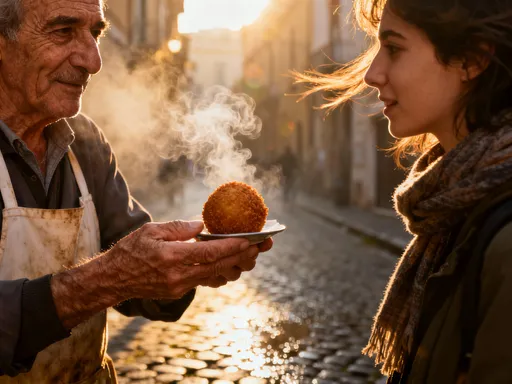
Contrast this with a small stall in the Ballarò market, tucked between spice sacks and fish crates. The vendor, a woman in her sixties, shaped each arancino by hand, stuffing them with homemade ragù and local cheese. She cooked only what she could sell within an hour, refusing to let batches sit. The difference was immediate: crisp shell, moist rice, rich filling. People lined up not for the Instagram shot but for the taste. This is the truth of Sicilian street food—quality is tied to care, not convenience.
To navigate this landscape, observation is key. Look for stalls with high turnover, especially among locals. Watch whether food is cooked to order or pulled from a warmer. Notice the ingredients—real ragù simmers for hours; fake versions rely on powders and shortcuts. The best street food often lacks signage, operates on cash only, and closes when sold out. It is not designed for mass appeal but for daily sustenance. By choosing wisely, travelers can move beyond the mirage and taste the real heartbeat of Sicilian food culture.
Pitfall #4: The Language Barrier on the Menu – Lost in Translation
Language can be a silent gatekeeper in Sicilian dining. Many restaurants in tourist areas offer English menus, but these translations often distort meaning, oversimplify dishes, or invent entirely new ones to sound appealing. What appears as “Sicilian lasagna” might bear no resemblance to the layered pasta locals know. “Sea urchin pasta” could be a buttery imitation with no real ricci. These linguistic shortcuts create a parallel menu—one that caters to expectations rather than reality.
I encountered this in a coastal village near Trapani. Eager to try a local specialty, I ordered “fresh anchovy and wild herb spaghetti” from an English menu. What arrived was a bland dish with canned anchovies and dried oregano. When I asked the waiter in broken Italian, he explained that the kitchen didn’t have fresh herbs that day and substituted. The English menu, however, made no mention of substitutions. Later, I watched a group of Italian speakers order the same dish in Italian and receive a vibrant version with fresh greens and briny fillets. The discrepancy was not accidental—it was systemic.
English menus often flatten complexity. A dish like pasta ca nunnata—“priest’s wedding pasta”—might be reduced to “baked pasta with cheese” without conveying its cultural significance or rich sauce of breadcrumbs, almonds, and saffron. Similarly, “grilled fish” could mean anything from locally caught swordfish to imported frozen fillets. Without understanding Italian food terms, travelers risk missing nuances or being misled by marketing.
The solution lies in engagement. Learn a few key words: fresco (fresh), di stagione (in season), del giorno (of the day). Ask for the menu del giorno in Italian. Point to what locals are eating. Even a simple “Cosa mi consiglia?” (“What do you recommend?”) can open doors to better choices. Some of my best meals came from pointing at a neighbor’s plate and saying, “Vorrei lo stesso.” Language is not just a tool for ordering—it’s a bridge to connection, a sign of respect that often leads to better treatment and more authentic food.
How to Eat Like a Local – Smart, Respectful, and Delicious
Eating like a local in Sicily is less about knowing every dish and more about adopting a mindset. It begins with timing. Sicilians eat late—lunch often starts at 1:30 or 2 p.m., dinner after 8:30, sometimes as late as 9 or 10. Restaurants in tourist zones may cater to earlier schedules, but the authentic rhythm unfolds later. By adjusting your pace, you align with local life and avoid the rush of tour groups.
Markets are another gateway. Visit early in the morning, when vendors are setting up and produce is at its freshest. The Mercato di San Domenico in Catania, the Capo Market in Palermo—these are not photo ops but working spaces where residents shop. Engage with vendors using simple Italian phrases: “Quanto costa?” “È fresco?” A smile and basic courtesy go far. Many will offer samples or recommendations, especially if they sense genuine interest.
Choose restaurants wisely. Avoid those with laminated multilingual menus displayed outside, aggressive touts, or staff who approach you on the street. These are often signs of tourist-focused operations. Instead, look for places filled with locals, especially during off-peak hours. A trattoria with a daily chalkboard menu, handwritten in Italian, is more likely to serve seasonal, made-to-order dishes. If the staff seems hesitant to accommodate special requests, that’s often a good sign—they prioritize tradition over customization.
Be flexible. Some of the best meals come from saying yes to unexpected invitations—joining a family at a festival, accepting a slice of sfincione from a vendor who insists, trying a dish you can’t pronounce. Sicilian hospitality is generous, but it responds to openness. Don’t cling to a “must-try” list. Let the day guide you. A spontaneous stop at a roadside lemon stand might yield the most memorable granita of your trip. True local eating is not a checklist—it’s a conversation.
Reimagining the Food Journey – Beyond the Plate
Food in Sicily is more than flavor—it is a lens into culture, history, and human connection. The most meaningful meals are not always the most perfect. They are the ones shared with strangers, the ones where the wine is slightly warm, the bread slightly stale, but the laughter genuine. They are the moments when you realize that eating is not just an act of consumption but of participation.
The pursuit of culinary perfection can blind travelers to these deeper rewards. Chasing five-star reviews, photographing every dish, ticking off iconic foods—these habits can turn dining into a performance rather than an experience. The irony is that in trying to capture authenticity, many miss it entirely. True connection comes not from the plate alone but from the context: the fisherman describing his catch, the baker pulling bread from the oven, the grandmother explaining how she makes pesto alla trapanese.
To eat mindfully in Sicily is to slow down, to listen, to accept imperfection. It is to understand that a dish made with care, even if simple, carries more meaning than a technically flawless meal made for show. It is to recognize that food is a bridge—not just between flavors, but between people.
So let go of the checklist. Step away from the guidebook. Let a market vendor guide your lunch. Accept an invitation you didn’t expect. Taste the fig that’s slightly bruised but impossibly sweet. In those unscripted moments, you’ll find what no one warns you about: that the real flavor of Sicily isn’t just in the food—it’s in the living, breathing, imperfect humanity behind it. And that, more than any cannoli, is worth savoring.