This Is Sardinia’s Wild Heart — Slow Travel Through Its Most Jaw-Dropping Terrain
You know that feeling when the landscape looks like it’s from another planet? That’s Sardinia. I spent two weeks moving slowly across its rugged interior, and every mile revealed something wilder — red rock canyons, silent granite peaks, hidden grottoes carved by the sea. This isn’t just a Mediterranean island; it’s a terrain unlike anywhere else in Europe. Slowing down let me truly feel its raw beauty — and I’m breaking down exactly how you can too.
Why Sardinia’s Terrain Defies Expectations
Sardinia is often marketed for its sapphire coastlines and luxury resorts, but beneath the postcard-perfect beaches lies a geological marvel shaped by time, fire, and tectonic force. The island emerged over 500 million years ago, forged from ancient volcanic activity and continental collisions that created a mosaic of landscapes unmatched in the Mediterranean. Its interior is a dramatic tapestry of granite highlands, limestone plateaus, deep river canyons, and wind-sculpted cliffs. While tourists flock to the Costa Smeralda, few venture into the island’s wild heart — a realm where silence reigns and nature writes the rules.
The contrast between Sardinia’s popular image and its true character could not be starker. Posters show sunbathers on white sand, but the island’s soul lives in places like the Gennargentu mountain range, where fog clings to jagged peaks long after sunrise, or the Supramonte, a vast karst wilderness where trails vanish into thin air. These terrains were shaped by the collision of the African and Eurasian tectonic plates, a slow-motion upheaval that lifted ancient seabeds into towering cliffs and folded granite into cathedral-like ridges. The result is a landscape that feels primordial, almost untouched by time.
What makes Sardinia’s geology truly exceptional is its diversity within a relatively small area. Within a two-hour drive, one can move from coastal dunes to alpine-like highlands, from volcanic plateaus covered in juniper scrub to canyons carved by seasonal rivers. The island hosts some of Europe’s oldest rocks — Precambrian granites over 500 million years old — standing in silent testimony to Earth’s earliest chapters. These formations are not just scenic; they shape the island’s ecology, water systems, and even cultural traditions.
Experiencing this terrain demands a shift in travel philosophy. Fast tourism — the kind that checks off landmarks in a day — simply cannot capture the depth of Sardinia’s interior. The nuances reveal themselves only through stillness: the way light shifts on a granite face at dawn, the sound of wind funneling through a narrow gorge, the sudden appearance of a wild mouflon on a distant ridge. Slow travel is not a luxury here; it is a necessity for true understanding. Only by moving with the rhythm of the land can visitors begin to feel its pulse, to witness the subtle changes that define its seasons and moods.
The Art of Moving Slow in a Fast World
In an age of instant gratification and packed itineraries, slow travel is a quiet rebellion. It is not merely about moving at a leisurely pace, but about choosing depth over distance, presence over productivity. During my journey through Sardinia, I made a deliberate choice to leave behind the rental car, the GPS-guided drives, and the pressure to see everything. Instead, I walked, cycled, and relied on regional buses and local knowledge. This shift transformed not only how I saw the island, but how I experienced it.
Immersion replaced observation. Rather than viewing landscapes through a windshield, I felt them — the crunch of gravel underfoot, the scent of wild thyme crushed beneath my boots, the sudden chill as a cloud passed over a sun-warmed ridge. Slow travel allowed me to notice details that fast tourism erases: the way stone walls in hillside villages follow the natural contours of the land, or how shepherds move their flocks along ancient transhumance routes unchanged for centuries. These moments of connection are not incidental; they are the essence of meaningful travel.
One of the most profound benefits of slowing down is the deepening of cultural connection. When I arrived in a small village on foot after a day’s hike, locals greeted me not as a tourist, but as someone who had earned their attention. Conversations unfolded over shared meals at family-run agriturismi, where dishes were made from ingredients grown or raised nearby. I learned about the importance of pastoral life, the rhythms of seasonal migration, and the resilience required to live in such a rugged environment. These exchanges were not performances for visitors; they were authentic glimpses into a way of life shaped by terrain and tradition.
Slow travel also carries a lighter environmental footprint. By avoiding rental cars and opting for walking, cycling, or public transport, travelers reduce emissions and minimize disruption to fragile ecosystems. Sardinia’s interior is home to sensitive habitats — from high-altitude meadows to coastal dunes — that can be damaged by off-road driving or overcrowded trails. Moving slowly encourages mindfulness, not just in movement, but in consumption and interaction. It fosters a respect for the land that is not just intellectual, but felt in the body.
Perhaps most unexpectedly, slowing down led to serendipitous discoveries. On a quiet path near Baunei, I stumbled upon a 19th-century shepherd’s hut, its stone walls still standing despite decades of abandonment. Inside, I found remnants of daily life — a rusted knife, a clay bowl, a faded prayer card. No sign marked the site; it existed outside the tourist map, revealed only to those who moved with patience. These unscripted moments, born of time and attention, became the most memorable parts of my journey.
Exploring the Supramonte: Where the Island Keeps Its Secrets
The Supramonte is Sardinia’s best-kept secret — a vast, roadless expanse of limestone that stretches from the central highlands to the east coast. This is not a landscape designed for convenience. Its cliffs rise like fortress walls, its valleys are hidden from view, and its trails are often marked only by cairns and instinct. Yet for those willing to venture in, the Supramonte offers some of the most breathtaking scenery on the island, a realm where nature remains unfiltered and untamed.
I began my exploration in the village of Urzulei, a cluster of stone houses clinging to a mountainside. From there, I followed a network of ancient shepherd paths that wound through olive groves and into the heart of the massif. The terrain shifted constantly — from shaded oak forests to open plateaus covered in aromatic broom and rockrose. The air grew cooler with elevation, and the silence deepened, broken only by the occasional cry of a distant bird or the rustle of a wild goat moving through the underbrush.
One of the most iconic routes in the Supramonte is the Selvaggio Blu, a multi-day trek along the Gulf of Orosei coastline that is often described as one of Europe’s most challenging hikes. While I did not attempt the full route, I walked several of its northern sections, where the trail clings to sheer cliffs hundreds of feet above the sea. The views were staggering — turquoise water crashing against black rock, sea caves yawning into the cliffs, and beaches accessible only by boat or arduous descent. Even on these shorter segments, the sense of exposure and awe was overwhelming.
What struck me most was not just the grandeur, but the intimacy of the landscape. Along the trail, I passed abandoned stone huts, their roofs long collapsed but walls still standing. These were once seasonal shelters for shepherds who brought their flocks to summer pastures. Nearby, I found natural springs — clear, cold water emerging from cracks in the rock, a lifeline in this dry terrain. Wild goats, descendants of ancient domesticated animals, watched me from rocky outcrops, their sure-footedness a testament to generations of adaptation.
For travelers considering the Supramonte, preparation is essential. While some trails are well-marked, others require navigation skills and a reliable GPS device. I recommend hiring a local guide for at least part of the journey, not only for safety but for insight into the land’s history and ecology. Guides often know hidden springs, safe descent routes, and the stories behind abandoned settlements. Even with modern tools, the Supramonte demands respect — sudden weather changes, rugged footing, and limited access to help mean that overconfidence can be dangerous.
Low-impact hiking is crucial in this fragile environment. Staying on marked trails, carrying out all waste, and avoiding disturbance to wildlife are simple but vital practices. The Supramonte is not a theme park; it is a living landscape shaped by centuries of natural and human interaction. By treading lightly, visitors help ensure that its secrets remain preserved for future generations.
Granite Wonders: The Silent Peaks of Gennargentu
If the Supramonte is Sardinia’s wild frontier, the Gennargentu range is its quiet cathedral. As the island’s highest mountain chain, it rises to 1,834 meters at Punta La Marmora, its granite peaks emerging like ancient sentinels from a sea of mist. Unlike the jagged Alps or the snow-capped Pyrenees, Gennargentu’s beauty is understated — a landscape of broad ridges, rounded summits, and vast open spaces that invite contemplation rather than conquest.
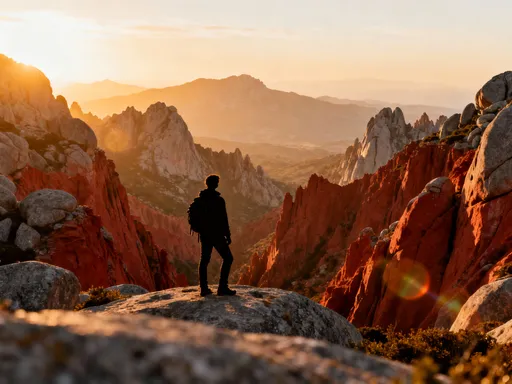
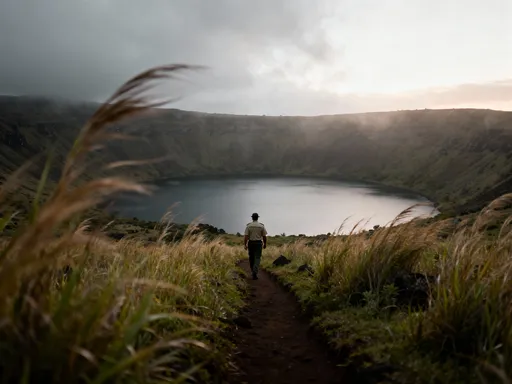
I spent three days hiking and camping in the northern sector of the range, based out of a small eco-lodge near the village of Fonni. Each morning began in stillness. At dawn, the first light painted the granite in shades of rose and gold, while fog pooled in the valleys below. By midday, the sun revealed the intricate textures of the rock — fissures carved by ice and wind, lichen patterns in ochre and gray, and scattered boulders that looked like sculptures left by giants. The silence was profound, broken only by the occasional cry of a golden eagle circling overhead.
The Gennargentu is home to some of Sardinia’s most unique wildlife. The wild Sardinian mouflon, a rare subspecies of wild sheep with massive curled horns, roams freely in these highlands. I spotted several herds at a distance, their reddish-brown coats blending perfectly with the autumnal scrub. The range also supports golden eagles, peregrine falcons, and the elusive Sardinian deer, though the latter is rarely seen. The flora is equally distinctive — hardy shrubs like myrtle, juniper, and tree heath dominate, adapted to the thin soil and harsh winds.
For travelers, the best time to visit Gennargentu is from late spring to early autumn. Winters can be severe, with snow blocking trails and freezing temperatures even at lower elevations. Summer brings warmth, but also more visitors, particularly on weekends. I found early September ideal — the weather was stable, the crowds had thinned, and the light was golden. Hiking routes vary in difficulty, from gentle forest paths to steep ascents requiring good physical condition.
Proper gear is essential. Sturdy hiking boots, layered clothing, and a reliable rain jacket are non-negotiable, as weather can change rapidly. I carried a lightweight tent, though several eco-friendly mountain huts offer basic accommodations for those who prefer shelter. These rifugi are run by local cooperatives and emphasize sustainability — solar power, composting toilets, and locally sourced meals. Staying in one supports conservation efforts and connects travelers to a network of stewards dedicated to preserving the range.
The experience of being in Gennargentu is not just physical, but emotional. There is a sense of timelessness in these mountains, a feeling that one is walking through a landscape unchanged for millennia. It is a place that invites reflection, where the noise of daily life fades and a deeper awareness emerges. For those seeking not just views, but transformation, the Gennargentu offers a rare gift.
Coastal Contradictions: When Sea Meets Stone
Sardinia’s coastline is a study in contrast — where the relentless force of the sea meets unyielding rock, creating some of the most dramatic scenery in the Mediterranean. Along the eastern shore, particularly in the Gulf of Orosei, limestone cliffs plunge hundreds of feet into turquoise water, their bases hollowed out by millennia of wave action into sea caves and natural arches. These are not gentle shores; they are landscapes of power and erosion, where beauty is born of conflict.
One of the most effective ways to experience this coastline is by kayak. I joined a small guided tour that launched from Cala Gonone, paddling south along the cliffs toward Cala Sisine. From the water, the scale of the terrain becomes fully apparent. The cliffs rise like cathedral walls, their layers revealing the island’s geological history in striations of gray, red, and white. Seabirds nest in crevices, their calls echoing across the coves. Occasionally, we passed the entrance to a sea cave — some large enough to paddle into, their interiors glowing with reflected blue light.
The sea itself is a living force. Even on calm days, the swell reminds you of its power. Over thousands of years, it has carved out beaches like Cala Luna and Cala Mariolu — crescent-shaped oases of white sand and crystal water, accessible only by boat or long, steep hikes. These spots are often crowded in high season, but arriving early or visiting in shoulder months makes a difference. I reached Cala Luna just after sunrise, when the beach was empty and the light turned the water to liquid silver.
What struck me most was the dialogue between water and stone. In some places, the cliffs are smooth, polished by wind and spray. In others, they are fractured and jagged, still resisting erosion. The process is ongoing, imperceptible in a human lifetime but evident in fallen boulders and collapsing arches. This is not a static landscape; it is in constant conversation with the elements.
Sustainable exploration is key. The popularity of these coastal areas means that unregulated tourism can lead to damage — litter, trail erosion, disturbance to nesting birds. Choosing small-group tours, avoiding anchoring on seagrass beds, and respecting protected zones are simple ways to minimize impact. Some areas, like the marine reserve near Capo Coda Cavallo, have strict regulations to preserve their ecology. Travelers should research guidelines in advance and follow them without exception.
By engaging with the coast mindfully, visitors honor not just its beauty, but its fragility. These shores are not backdrops for photos; they are dynamic ecosystems shaped by time and tide. To witness them is a privilege, one that comes with responsibility.
Villages That Hold the Land’s Memory
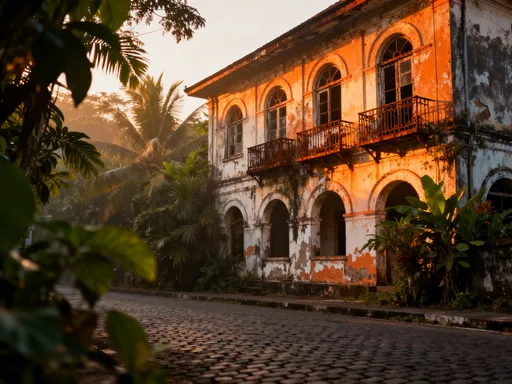
Scattered across Sardinia’s interior are villages that seem to grow directly from the rock — Mamoiada, Orgosolo, Ulassai — each perched on a hilltop, wrapped in history, and deeply connected to the land. These are not tourist attractions preserved for show, but living communities where traditions have evolved in response to the challenges of the terrain. To visit them is to step into a culture shaped by isolation, resilience, and a profound relationship with nature.
In Mamoiada, I witnessed the famous Mamuthones festival, a winter ritual dating back centuries. Men in heavy sheepskins and wooden masks parade through the streets, their bells shaking in rhythmic cadence. The origins are unclear, but many believe the masks represent ancient spirits or ancestral figures, a plea for fertility and protection. The costumes, made from local materials, reflect the island’s pastoral roots. Such festivals are not performances; they are acts of cultural continuity, passed down through generations.
Orgosolo is known for its murals — over 100 political and social frescoes that cover the town’s buildings. While some depict historical events, others reflect the community’s relationship with the land — shepherds, droughts, land rights. Walking through the narrow streets, I felt the weight of collective memory. The town has long been a center of resistance and identity, where art serves as both expression and education.
Staying in family-run agriturismi deepened my understanding. These farm stays offer simple rooms, home-cooked meals, and direct contact with local life. I shared dinners with hosts who spoke of seasonal cycles — when to shear sheep, when to gather wild herbs, when to move flocks to higher pastures. The food was hyper-local: pecorino cheese, pane carasau (a crisp flatbread), and malloreddus (a hand-rolled pasta). Every dish told a story of adaptation and resourcefulness.
Supporting these communities is one of the most meaningful acts a traveler can make. Their way of life is under pressure from depopulation and economic change. By choosing to stay, eat, and learn locally, visitors help sustain traditions that might otherwise fade. These villages are not museums; they are vital custodians of Sardinia’s soul.
How to Plan Your Own Terrain-Focused Journey
Designing a journey through Sardinia’s wild terrain requires intention. This is not a destination for passive tourism, but for those seeking depth, challenge, and connection. To truly experience its landscapes, plan for a minimum of 10 to 14 days. Rushing through in a week means missing the slow revelations that define this island.
Begin by choosing your focus. Are you drawn to high-altitude solitude? Prioritize Gennargentu and the central highlands. Prefer coastal drama? Base yourself near Baunei or Dorgali for access to the Gulf of Orosei. Interested in cultural immersion? Spend time in the Barbagia region, home to Orgosolo, Mamoiada, and other historic villages. Each area offers a distinct facet of Sardinia’s character.
Transportation should support, not hinder, your pace. While renting a car offers flexibility, consider supplementing it with regional ARST buses, bike rentals, and guided walking tours. Some of the most rewarding experiences come from arriving somewhere under your own power — by foot, pedal, or paddle. For remote trails, GPS devices or offline maps are essential. Apps like Gaia GPS or Komoot can help navigate lesser-known paths.
Packing wisely enhances comfort and sustainability. Choose lightweight, moisture-wicking layers that can be mixed and matched. A durable pair of hiking boots is indispensable. Bring a reusable water bottle, utensils, and a small repair kit. Minimize single-use plastics — many villages have water refill stations. Sun protection, insect repellent, and a basic first-aid kit are also crucial.
Finally, approach this journey with humility and openness. Sardinia’s terrain does not exist for entertainment; it demands respect. Let the land set the pace. Allow time for stillness, for conversation, for unexpected detours. This is not travel as consumption, but as communion. In a world that moves too fast, Sardinia offers a rare invitation — to slow down, to listen, and to feel the earth beneath your feet.