Lost in Vienna’s Soul: Where Every Street Sings Culture
Have you ever wandered a city that feels like it’s whispering stories? Vienna isn’t just about grand palaces and classical music posters—step off the Ringstrasse, and you’ll find artisans tuning violins in quiet courtyards, coffeehouse poets scribbling sonnets, and hidden galleries pulsing with avant-garde life. I roamed its cobblestone veins for days, drawn not by checklists, but by moments that felt alive. This is cultural immersion at its purest—unscripted, intimate, and deeply human. Unlike cities that perform their heritage behind glass, Vienna lives its culture in the rhythm of daily life. To know it, you must move slowly, listen closely, and allow yourself to be surprised.
The Rhythm of Wandering: Why Slow Exploration Reveals Vienna’s True Character
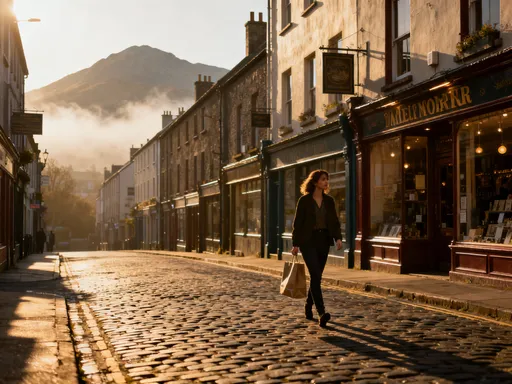
Vienna rewards those who wander without urgency. While many tourists follow the well-trodden path from St. Stephen’s Cathedral to Schönbrunn Palace, the city’s deeper soul reveals itself in the spaces between. Neighborhoods like Neubau, Spittelberg, and Alsergrund pulse with a quieter, more personal energy. These districts, once working-class enclaves, have evolved into cultural crossroads where old and new coexist in harmony. Here, cobblestone alleys open into sun-dappled courtyards, and 19th-century facades house independent bookshops, craft breweries, and family-run bakeries that have been kneading dough for generations.
Walking without a fixed destination allows the senses to lead. The scent of roasting coffee drifts from an open window. A snippet of conversation in Arabic, Serbian, or Turkish blends with the melodic cadence of Viennese German. A street musician plays a melancholic waltz on an accordion near a tram stop, his case filled with coins and crumpled euro notes. These are not staged performances but fragments of everyday life, and they form the true soundtrack of the city. When you slow down, you begin to notice the subtle layers—how a wrought-iron balcony might hold geraniums in summer and frost in winter, or how a single café might host a morning meeting between artists, a midday chess game among retirees, and an evening poetry reading.
Vienna’s history is not confined to museums. It lives in the way people inhabit their city. The Habsburg legacy is visible in the grand architecture, but the Austro-Hungarian Empire’s multicultural spirit endures in the diversity of languages, cuisines, and traditions. By drifting through neighborhoods rather than rushing between landmarks, travelers gain a more nuanced understanding of how the past informs the present. This kind of exploration fosters a deeper connection—one that is emotional, sensory, and lasting. It transforms a visit from a series of sights into a lived experience.
Coffeehouse Culture Beyond the Postcard: Sitting Time Still in Vienna’s Living Rooms
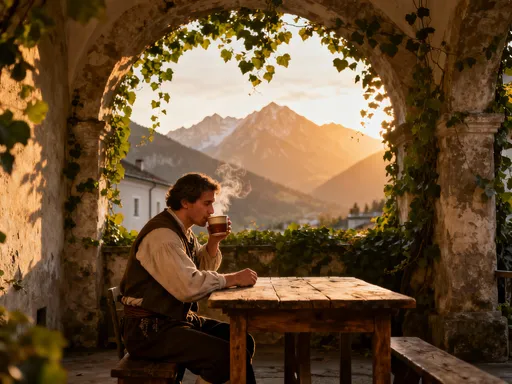
No symbol captures the Viennese way of life more than the traditional coffeehouse. More than mere cafés, these establishments are social institutions, often family-run for decades, where time moves differently. To enter one is to step into a space where conversation, contemplation, and creativity are honored. The ritual begins the moment you sit: a glass of cold tap water appears without asking, a selection of newspapers is offered on wooden sticks, and your coffee—be it a melange, fiaker, or einspänner—arrives on a silver tray with a small pastry. The expectation is not to order and leave, but to linger, to read, to write, or simply to be.
Take Café Sperl in the 6th district, a timeless gem with marble tabletops, red velvet banquettes, and a ceiling painted with faded floral motifs. Opened in 1880, it has hosted intellectuals, artists, and locals who return daily, often sitting at the same table for years. Or consider Café Diglas in the 2nd district, where the morning light filters through tall windows, illuminating patrons bent over newspapers or laptops. These spaces are not frozen in nostalgia; they are actively used, evolving while preserving their essence. A student might study for exams at one table, while a couple discusses their weekend plans at another. A writer could spend three hours on a single cup, filling pages of a notebook.
The coffeehouse is a democratic space. No one rushes you. No one judges how long you stay. This cultural norm—of valuing presence over productivity—is rare in today’s fast-paced world. By sitting quietly and observing, you become part of the scene. You hear the clink of spoons, the rustle of newspaper pages, the low hum of conversation in multiple languages. You witness how Viennese people cherish moments of stillness, how they treat these spaces as extensions of their homes. In doing so, you participate in a tradition that UNESCO has recognized as part of Austria’s intangible cultural heritage. To experience it is to understand a fundamental truth about Vienna: culture is not something you consume. It is something you inhabit.
Music That’s Everywhere—And Nowhere: Finding Classical Echoes in Unexpected Corners
Vienna is often called the capital of classical music, and for good reason. The city was home to Mozart, Beethoven, Haydn, Schubert, and Strauss, and their legacy is celebrated in concert halls like the Musikverein and the Vienna State Opera. But to believe that music exists only within these gilded walls is to miss its true presence. In Vienna, music is not confined to scheduled performances. It spills into the streets, floats through parks, and echoes in courtyards. It is part of the city’s breath.
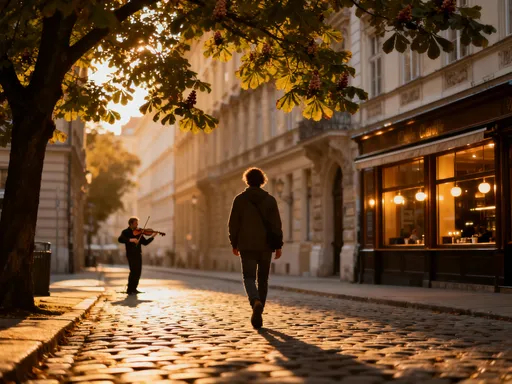
Walk near the conservatories in the late afternoon, and you might hear the muffled strains of a violin rehearsal drifting from an open window. In minor squares like Josefsplatz or Minoritenplatz, a cellist plays Bach suites for passersby, his instrument case open but not begging—simply sharing. On summer evenings, parks such as the Stadtpark or Augarten host free open-air concerts, where families spread blankets and children dance to waltzes under the trees. These moments are unannounced, unadvertised, and all the more magical for it.
For those seeking a more formal but still accessible experience, Vienna offers countless affordable options. The Musikverein and Konzerthaus host student recitals, chamber music performances, and lunchtime concerts at prices far below those of gala events. Many churches, including the Peterskirche and the Augustinerkirche, offer free organ concerts or choral evensong, allowing visitors to experience sublime music in a sacred, contemplative setting. Even the U-Bahn stations sometimes feature live musicians, their melodies bouncing off tiled walls in unexpected harmonies.
This omnipresence of music reflects a cultural value: that art should be woven into daily life, not reserved for special occasions. Children grow up hearing Mozart in school, attending youth orchestras, and learning instruments as part of their education. This deep integration means that music is not a luxury but a common language. For the visitor, it means that cultural enrichment doesn’t require a ticket or a schedule. It requires only openness—to pause, to listen, to let the city’s sonic landscape wash over you.
Markets as Cultural Stages: From Naschmarkt Aromas to Local Encounters
If Vienna’s coffeehouses are its living rooms, its markets are its gathering squares—vibrant, multicultural, and full of life. The Naschmarkt, stretching along the Wien River, is the most famous, but it is far from the only one. Each market has its own character, from the farmers’ market at Brunnenmarkt to the flea market at Urania. These are not tourist attractions in the conventional sense. They are places where Viennese people shop, eat, and socialize, and where visitors who wander with curiosity can find some of the city’s most authentic moments.
The Naschmarkt, in particular, is a sensory mosaic. One stall sells handmade pierogi from Poland, another offers Turkish gözleme sizzling on a griddle. A vendor from Serbia proudly displays ajvar, while a local cheesemaker presents Alpine varieties wrapped in wax paper. The air is thick with the scent of paprika, fresh basil, roasted nuts, and simmering broths. Handwritten signs appear in German, Arabic, and Cyrillic, reflecting the diverse communities that have shaped modern Vienna. This is not fusion cuisine—it is coexistence, expressed through food.
What makes these markets truly cultural is the interaction. A vendor might offer a sample with a smile, then launch into a story about his grandmother’s recipe. A regular customer might greet a fishmonger by name, discussing the day’s catch. Bartering is rare, but banter is common. These exchanges, brief as they may be, create micro-connections that enrich the experience. For families visiting, markets offer a chance to explore new flavors together, to teach children about global cultures through taste, and to slow down in a space where commerce is still personal.
Going beyond food, some markets feature secondhand books, vintage clothing, and handmade crafts. At the Flohmarkt am Reumannplatz, you might find a 1970s record of Austrian folk music or a weathered leather suitcase with stamps from forgotten journeys. These objects carry stories, and browsing them feels like sifting through the city’s collective memory. In every direction, culture is on display—not in curated exhibitions, but in lived reality. To visit a Viennese market is to witness the city’s openness, its respect for tradition, and its embrace of change.
Hidden Ateliers and Urban Galleries: The Pulse of Contemporary Art in Quiet Courtyards
Beyond the grand museums of the MuseumsQuartier lies a more intimate art scene—one that thrives in hidden corners. Vienna’s Innenhöfe, or inner courtyards, often tucked behind unassuming street doors, are home to artist studios, small galleries, and experimental spaces. These are not commercial ventures designed for mass appeal, but places where creativity unfolds in relative privacy. Yet many artists welcome the public during special events, transforming secluded workshops into open stages.
The *Offenes Atelier* days, held annually in spring and autumn, are a prime opportunity to explore this underground culture. During these weekends, hundreds of artists across the city open their studios to visitors. You might climb a narrow staircase in a 19th-century building and find a ceramicist shaping delicate porcelain forms, inspired by both Viennese Secessionist design and Japanese wabi-sabi aesthetics. In another courtyard, a painter might be working on a large abstract piece, her walls covered in sketches and color swatches. A sculptor could be welding metal in a converted factory loft, the sound echoing through the space.
These encounters are profoundly human. There are no plaques, no audio guides, no velvet ropes. You can ask questions, hear about the artist’s process, and sometimes even watch a piece evolve in real time. Children are often fascinated, seeing art not as something distant but as something made by real people with hands and tools. For adults, it’s a reminder that creativity is not confined to institutions. It lives in attics, basements, and repurposed industrial spaces.
Smaller galleries, such as those in the 7th and 20th districts, also showcase emerging talent. Exhibitions might focus on digital art, performance, or socially engaged projects. Unlike commercial galleries, these spaces often prioritize dialogue over sales. Curators might host informal talks, and visitors are encouraged to engage, not just observe. This grassroots art scene reflects Vienna’s broader cultural ethos: that art should be accessible, thoughtful, and connected to community. By seeking out these hidden spaces, travelers gain a more complete picture—one that includes not just the masters of the past, but the voices shaping the future.
Public Spaces as Cultural Theaters: How Parks and Squares Host Daily Life
In Vienna, public space is not just for transit. It is designed for lingering, for gathering, for living. The city’s parks and squares function as open-air theaters where culture is performed not by professionals, but by ordinary people. This intentional design reflects a deep belief in the value of shared urban life. Unlike cities where public benches are scarce or public gatherings discouraged, Vienna embraces the idea that culture flourishes in communal spaces.
Take the Volksgarten, part of the Hofburg complex. In spring, its rose gardens burst into color, drawing photographers, couples, and elderly women reading novels on benches. In summer, children chase bubbles near the Theseus Temple, while tourists sip lemonade under parasols. The space is formal yet welcoming, a place where beauty and leisure coexist. Nearby, the Burggarten hosts a daily ritual: retirees playing chess at outdoor tables, their moves deliberate, their conversations slow and thoughtful. Some tables are permanently reserved, marked by small plaques, turning the game into a tradition passed through generations.
Schwarzenbergplatz, with its grand fountain and open lawns, often becomes a stage for public discourse. On weekends, you might find small groups engaged in political debates, poetry readings, or yoga sessions. These are not official events but spontaneous expressions of civic life. Even the city’s playgrounds are thoughtfully designed, with wooden structures that blend into the landscape and encourage imaginative play. Parents sit nearby, chatting, while children climb, swing, and dig in sandboxes.
This integration of culture into public space is no accident. Vienna consistently ranks among the world’s most livable cities, in part because of its investment in parks, pedestrian zones, and community infrastructure. Benches are plentiful. Trees are carefully maintained. Traffic is minimized in central areas. These choices create an environment where people feel safe and invited to stay. For the visitor, it means that cultural experiences are not limited to ticketed events. They are available on every corner, in every park, in every shared moment of public life.
Wandering with Purpose: Practical Tips for Culturally Mindful Exploration
To truly experience Vienna’s culture, preparation matters—but not in the way one might expect. You don’t need a detailed itinerary or a long list of must-see attractions. What you do need are comfort, curiosity, and respect. Start with footwear: Vienna’s charm lies in its details, and you’ll want to walk for hours. Choose shoes that support long strolls on cobblestones. Carry a small notebook or use a notes app to jot down observations—a phrase overheard, a scent remembered, a moment of beauty. These fragments will become the true souvenirs of your trip.
Learning a few basic German phrases can go a long way. While most Viennese speak excellent English, especially in tourist areas, a simple *Guten Tag*, *Danke*, or *Entschuldigung* shows respect and often opens doors—literally and figuratively. Vendors at markets, baristas in coffeehouses, and artists in studios appreciate the effort, even if your accent is imperfect. It signals that you are not just passing through, but trying to connect.
Plan your visits for weekdays when possible. Popular sites like the Belvedere or the Albertina are quieter, and local life is more visible. Markets are livelier in the morning, while coffeehouses reach their rhythm by midday. Avoid the temptation to cram too much into one day. Instead, pick a neighborhood—perhaps Josefstadt or Landstraße—and spend several hours exploring at a gentle pace. Enter side streets. Peek into courtyards. Sit on a park bench and simply watch.
When photographing, be mindful. Ask permission before taking pictures of people, especially in intimate settings like markets or small galleries. Respect quiet spaces—libraries, churches, studios—by speaking softly and moving gently. Remember that you are a guest in a living city, not a consumer of a performance. The goal is not to capture everything, but to be present in moments that matter.
Conclusion: Vienna, Remembered in Moments, Not Monuments
In the end, Vienna is not remembered for its grand facades or famous names, but for the quiet moments in between. It is the elderly man sipping coffee while reading a newspaper at Café Central. It is the scent of cinnamon rolls from a neighborhood bakery at dawn. It is the sound of a child laughing as she chases pigeons in the Burggarten. These are the fragments that linger, long after the trip has ended.
Vienna teaches a different way of traveling—one that values presence over productivity, depth over distance, and connection over consumption. Its culture is not something you check off a list. It is something you feel in the rhythm of a street musician’s melody, in the warmth of a shared smile at a market stall, in the stillness of a coffeehouse at dusk. To wander its streets is to be invited into a way of life that honors slowness, beauty, and human connection.
For the thoughtful traveler, especially one seeking meaning beyond the surface, Vienna offers a rare gift: the chance to slow down and truly see. It reminds us that the richest cultural experiences are not always the loudest or the most advertised. They are the quiet ones—the unscripted, the unexpected, the deeply human. So come not with a checklist, but with open eyes and an open heart. Let the city guide you. Listen to its whispers. And discover, as so many have, that in Vienna, culture is not performed. It simply is.