You Won’t Believe What I Saw in Krabi – A Private Escape Like No Other
Krabi, Thailand, isn’t just another tropical postcard—it’s a living canvas of limestone cliffs, emerald waters, and hidden viewpoints that feel like secrets whispered by nature. I went searching for solitude and found something rarer: moments so vivid they rewired my sense of wonder. This isn’t about crowded tours or cookie-cutter itineraries. It’s about the private, soul-stirring viewing experiences most travelers never see. These are the quiet hours when the wind stills, the light turns golden, and the landscape seems to breathe. In Krabi, beauty isn’t just seen—it’s felt. And for those willing to step beyond the well-worn paths, it offers a rare gift: the chance to witness nature not as a spectacle, but as a presence.
Why Krabi Stands Out in Thailand’s Travel Landscape
Krabi’s geography is nothing short of dramatic. Rising abruptly from the Andaman Sea, its towering limestone karsts are crowned with lush jungle and laced with hidden caves and freshwater streams. The province stretches from the mainland coast deep into the archipelago, where islands like Phi Phi, Hong, and Railay form a scattered necklace of natural wonder. Unlike the broad beaches and high-rise developments of Phuket or the bustling nightlife of Pattaya, Krabi has preserved a quieter rhythm. Its terrain—steep, rugged, and often inaccessible—has naturally limited mass tourism, allowing it to retain a sense of untouched beauty.
This contrast is precisely what draws an increasing number of travelers seeking more than just sun and sand. While Phuket offers convenience and infrastructure, Krabi offers immersion. The region’s diverse ecosystems—mangrove forests, coral reefs, limestone cliffs, and tropical rainforests—create a dynamic environment where every turn reveals a new layer of natural complexity. Visitors can hike through ancient jungle trails in the morning and kayak through bioluminescent waters by night, all within a compact area. This richness, combined with Krabi’s relatively modest development, makes it a prime destination for those prioritizing authenticity over convenience.
The appeal of Krabi is also aligned with a broader shift in travel preferences. More travelers today are moving away from checklist tourism—rushing from one landmark to the next—and instead seeking meaningful, sensory-rich experiences. Krabi caters to this desire with its emphasis on slow exploration and natural beauty. The region’s accessibility from Bangkok via direct flights or overland routes ensures it remains reachable, yet its terrain naturally filters out those looking for a passive vacation. This balance—between being easy to reach and difficult to fully conquer—gives Krabi a unique position in Thailand’s travel landscape.
Moreover, Krabi’s communities have embraced sustainable tourism with increasing awareness. Local guides, family-run guesthouses, and small tour operators often prioritize environmental preservation and cultural respect. This grassroots commitment enhances the traveler’s experience, making it feel less like consumption and more like connection. When you climb to a secluded viewpoint with a local guide who knows the name of every bird call, or when you sip fresh coconut water from a stall run by a fisherman’s wife, the journey becomes layered with meaning. Krabi doesn’t just offer scenery; it offers stories—quiet, unscripted, and deeply human.
The Allure of Private Viewing Experiences
Private viewing experiences are not merely about avoiding crowds—they are about cultivating intimacy with a place. In Krabi, this means standing on a cliff at dawn as the first light spills over the sea, or floating in a quiet lagoon where the only sound is the gentle lap of water against the kayak. These moments are not staged or scheduled; they unfold naturally, requiring patience, presence, and a willingness to move at nature’s pace. The term “private” here does not imply exclusivity through cost, but rather through timing, intention, and respect for the environment.
Solitude enhances perception. When the mind is not cluttered by noise, movement, or distraction, the senses sharpen. Colors appear more vivid, sounds more distinct, and the air feels heavier with meaning. A sunrise seen from Railay Beach at 5:30 a.m., with only a few fishermen in the distance, carries a weight that the same sunrise at 9 a.m. surrounded by tourists simply cannot match. The experience becomes less about capturing the perfect photo and more about absorbing the moment into memory. This shift—from observation to immersion—is what transforms a trip into a transformation.
One of the most powerful examples of this is kayaking in the Hong Islands. While day tours bring dozens of visitors each afternoon, arriving early by private longtail boat allows for a different kind of encounter. Paddling through the narrow channels between limestone walls, with sunlight filtering through the canopy above, creates a sense of being inside a living cathedral. The water is so clear that the coral below seems within reach, and the silence is broken only by the dip of the paddle. There is no guide shouting facts through a megaphone, no rush to the next stop—just the rhythm of the journey and the unfolding beauty of the place.
This shift from checklist tourism to mindful observation reflects a deeper change in how people travel. Many are no longer satisfied with simply saying, “I’ve been there.” They want to say, “I was there.” And to be truly present requires space—both physical and mental. Krabi, with its network of hidden trails, secluded beaches, and quiet inlets, provides that space. It invites travelers to slow down, to look closer, and to let the landscape speak on its own terms. In doing so, it offers not just views, but vision.
Hidden Gems with Breathtaking Vistas
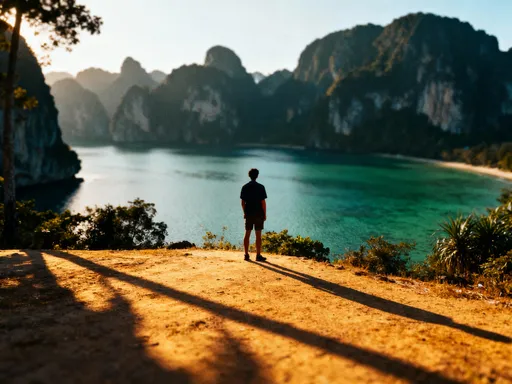
While Railay Beach and Tiger Cave Temple are well-known, Krabi is dotted with lesser-known spots that offer equally stunning, if not more profound, visual rewards. The Ton Sai Trail, for instance, winds through dense jungle and leads to a series of elevated clearings that overlook the Andaman Sea. These viewpoints are rarely crowded, even during peak season, because they require a 30- to 45-minute hike through uneven terrain. The effort is repaid with panoramic views of limestone spires rising from turquoise water, often framed by drifting mist in the early morning.
Near the southern end of Ao Nang, the area around Thung Dua offers another quiet escape. A short trail leads to a grassy knoll where visitors can sit and watch the sun dip below the horizon, with no vendors, no music, and no crowds. It’s the kind of place where time seems to pause, and the only company is the occasional gecko darting across the rocks. From this vantage point, the coastline unfolds like a living map, revealing hidden coves and distant islands that appear almost mythical in the fading light.
Further offshore, islands like Koh Kai (Chicken Island) and Koh Talu are often bypassed by large tour groups due to their limited facilities. Yet, they offer some of the clearest waters and most unobstructed panoramas in the region. Koh Talu, in particular, is surrounded by coral reefs and has a small, secluded beach on its northern side that faces west—ideal for sunset viewing. Because it lacks a permanent dock, access is usually by private longtail or kayak, which naturally limits foot traffic. This isolation preserves both the tranquility and the ecological integrity of the site.
Timing is crucial when visiting these hidden gems. Arriving early in the morning—between 6 and 8 a.m.—ensures fewer people and better lighting conditions. Midday tours often bring waves of visitors to even the most remote spots, so planning ahead is essential. Checking local tide schedules and boat departure times can help travelers coordinate their visits for maximum solitude. Additionally, choosing weekdays over weekends can significantly reduce encounters with large groups.
Ethical considerations are equally important. As more travelers seek out secluded spots, the risk of environmental degradation increases. Staying on marked trails, avoiding littering, and refraining from touching coral or disturbing wildlife are simple but vital practices. Some areas, like the cliffs near Railay, are home to nesting birds and should not be climbed during breeding seasons. Respecting these guidelines ensures that the beauty of Krabi remains intact for future visitors and local communities alike. True privacy in nature is not just about finding empty space—it’s about preserving it.
Best Times and Conditions for Optimal Views
The quality of a viewing experience in Krabi is deeply influenced by timing and environmental conditions. The dry season, which runs from November to April, is traditionally considered the best time to visit. During these months, rainfall is minimal, skies are clear, and the sea is calm, making boat trips and water activities more reliable. Visibility is at its peak, allowing for crisp, unobstructed views of the coastline and islands. This period also coincides with the northern hemisphere’s winter, drawing international visitors seeking warmth and sun.
However, the green season—from May to October—offers its own unique advantages. While afternoon showers are common, they are often brief and followed by dramatic clearing skies. The landscape becomes intensely green, and waterfalls that are dry in the winter months come to life. The rain also washes away airborne particles, resulting in exceptionally clear air after storms. Photographers and nature lovers may find the contrast of dark clouds against glowing limestone cliffs particularly striking during this time. Additionally, the green season sees fewer tourists, increasing the chances of solitude at popular and hidden spots alike.
One of the most magical times to experience Krabi is during golden hour—shortly after sunrise and before sunset. At these times, the low angle of the sun casts long shadows and bathes the limestone formations in warm, amber light. The cliffs, which appear stark and gray under midday sun, transform into glowing sculptures, their textures and layers suddenly visible. This effect is especially powerful when viewed from the water, where the reflection doubles the spectacle. For those on the mainland, elevated viewpoints capture the full sweep of this transformation as light moves across the sea.
Weather patterns also affect water clarity, which is crucial for activities like snorkeling, diving, and kayaking. Calm seas and minimal runoff result in the clearest conditions, typically found in the late dry season. Wind direction matters too; onshore winds can stir up sediment, while offshore winds keep the water still and transparent. Travelers interested in underwater views should plan accordingly, checking local forecasts and consulting with experienced boat operators.
Moon phases play a subtle but significant role in nighttime experiences. On full moon nights, beach walks along Railay or Phra Nang become surreal, with enough natural light to see without flashlights. The reflection on the water creates a silver path stretching to the horizon. For kayakers, night paddles during high moon periods offer a rare chance to witness bioluminescent plankton, which glow when disturbed. These moments—quiet, luminous, and fleeting—are among the most memorable in Krabi, but they require careful planning around lunar cycles and tides.
Choosing the Right Base for Your Visual Journey
Where you stay in Krabi directly shapes your access to private viewing opportunities. Each area offers a different rhythm and proximity to nature. Ao Nang, the most developed town, provides convenience with its restaurants, shops, and tour agencies. Boutique bungalows and mid-range resorts line the beach, offering easy access to boat trips and island tours. While it’s not the quietest option, staying on the northern or southern edges of Ao Nang can provide a balance between comfort and serenity.
For a more immersive experience, Railay Beach is unmatched. Accessible only by boat, this peninsula feels worlds apart from mainland bustle. Private bungalows nestled between cliffs offer direct beach access and stunning sunrise views. Because vehicles are absent, the atmosphere is peaceful—no engines, no horns, just the sound of waves and birds. From Railay, kayaking to nearby lagoons or hiking to hidden viewpoints becomes part of daily life rather than a scheduled tour. The lack of roads also means fewer tourists linger beyond a day trip, preserving the area’s tranquility.
Travelers seeking deeper seclusion might consider eco-lodges near Khao Sok National Park, which, while not on the coast, shares the same karst geology and lush vegetation. These lodges, often built on stilts over lakes or rivers, offer morning mist rising from the water, jungle treks with rare bird sightings, and a profound sense of being surrounded by wilderness. Though farther from Krabi’s main beaches, they provide a complementary experience—ideal for those extending their stay and wanting to explore inland beauty.
Private rentals, especially villas with sea views, are another excellent choice for those prioritizing comfort and privacy. Many come with personal chefs, infinity pools, and direct access to quiet coves. While more expensive, they allow families or small groups to design their own pace without relying on fixed tour schedules. The key is selecting locations that minimize light pollution and maximize natural vistas—facing west for sunsets or elevated for panoramic views.
Transportation within Krabi varies by location. Longtail boats are the primary mode of inter-island travel, offering flexibility and access to remote beaches. Motorbikes are popular on the mainland, allowing independent exploration of backroads and viewpoints. For those less confident driving, private transfers or guided tours with trusted operators ensure safety and local insight. Regardless of choice, the goal is to minimize time spent in transit and maximize time spent in stillness, observing.
Tools and Habits That Elevate the Experience
The right tools can enhance a viewing experience without overshadowing it. Lightweight, practical gear makes exploration easier and more enjoyable. Polarized sunglasses, for example, reduce glare on water surfaces, allowing travelers to see deeper into the sea and spot marine life more clearly. Compact binoculars are invaluable for birdwatching or studying distant rock formations without disturbing the environment. A waterproof notebook and pen enable quiet reflection—jotting down thoughts, sketching landscapes, or recording sensory details that photos might miss.
Technology, when used mindfully, can support rather than distract. Apps that track tides, sunrise and sunset times, and moon phases help travelers plan visits for optimal conditions. Weather forecasting tools provide advance notice of storms or clearing skies, allowing for last-minute adjustments. However, over-reliance on devices can pull attention away from the present moment. The most meaningful experiences often occur when the phone is put away, and the eyes are allowed to wander freely.
Slow travel is perhaps the most powerful habit one can adopt. Staying in one place for several days—rather than hopping from island to island—allows the landscape to reveal itself gradually. Light changes, tides shift, and wildlife patterns emerge. A beach that looks ordinary at noon may become magical at low tide, exposing sandbars and tidal pools. A trail hiked in the morning may feel completely different in the evening, alive with nocturnal sounds. This deeper engagement fosters a sense of intimacy that fleeting visits cannot match.
Capturing moments through photography can be rewarding, but it should not replace presence. The temptation to frame every view through a lens can lead to missing the texture of the air, the scent of salt and jungle, the feeling of warmth on the skin. A balanced approach—taking a few intentional photos while spending most of the time simply looking—preserves both memory and experience. Some of the most powerful moments are those held only in the mind, undisturbed by screens or settings.
Protecting the Beauty You’ve Come to See
The very qualities that make Krabi special—its clarity, silence, and wildness—are fragile. Responsible tourism is not an optional add-on; it is essential to preserving the destination’s soul. Simple actions, like staying on marked trails, avoiding single-use plastics, and refraining from feeding or touching wildlife, have a cumulative impact. Coral reefs, for instance, can be damaged by sunscreen chemicals or careless fins, so using reef-safe products and maintaining distance is crucial.
Supporting local communities is another vital aspect of ethical travel. Choosing small, family-run tour operators over large commercial companies ensures that income stays within the region. Buying food from local markets, hiring local guides, and staying in independently owned accommodations contribute directly to the well-being of residents. These choices foster mutual respect and create more authentic interactions—conversations that go beyond transactions.
Personal awe can become a catalyst for stewardship. When a traveler is moved by the sight of a sunrise over the Andaman Sea, that emotion can translate into action—donating to conservation groups, spreading awareness, or simply making more mindful choices on future trips. Many visitors leave Krabi not just with photos, but with a renewed commitment to protecting natural spaces wherever they go.
The final reflection is this: to truly see a place is to honor it. Krabi does not exist for the sake of tourism; it exists as a living, breathing ecosystem with its own rhythms and rights. When travelers approach it with humility, curiosity, and care, they become part of its story—not as consumers, but as witnesses. And in that quiet witnessing, they carry home something far more lasting than souvenirs: a deeper way of seeing the world, shaped by the cliffs, the tides, and the silence of a place that reminds us what wonder feels like.
Krabi offers more than scenery—it offers clarity. When you step away from the expected paths and let the silence of its cliffs and waters speak, you don’t just view a destination. You feel it. And in that quiet, you carry home not just memories, but a renewed way of seeing the world.